Species Spotlight: Hooded Storksbill
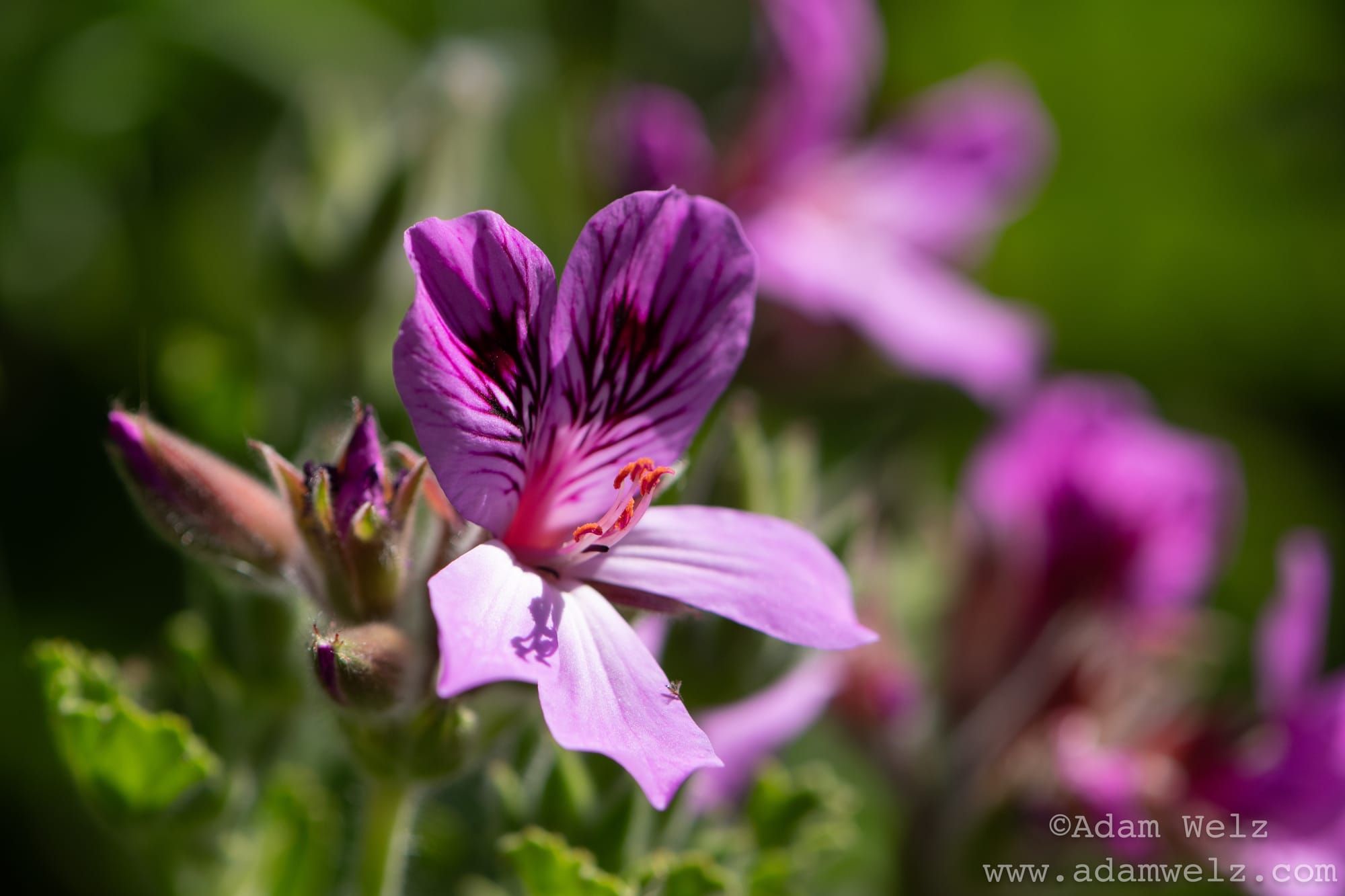
It's the time of year when many fynbos patches around Cape Town turn a vibrant, deep pink from the abundant flowers of Pelargonium cucullatum, the Hooded Storksbill. Many Capetonians have no idea that this plant has played an important role in the global horticultural industry, and is in fact the parent of many so-called geraniums grown around the world.
In the 1600s some European visitors to the Cape took Pelargonium cucullatum home with them and successfully grew it in their gardens. It was then taken to other continents, and horticulturists subsequently crossed it with other Pelargonium species to create commercial hybrids including the popular Regal Pelargoniums, also known as Martha Washington Geraniums.
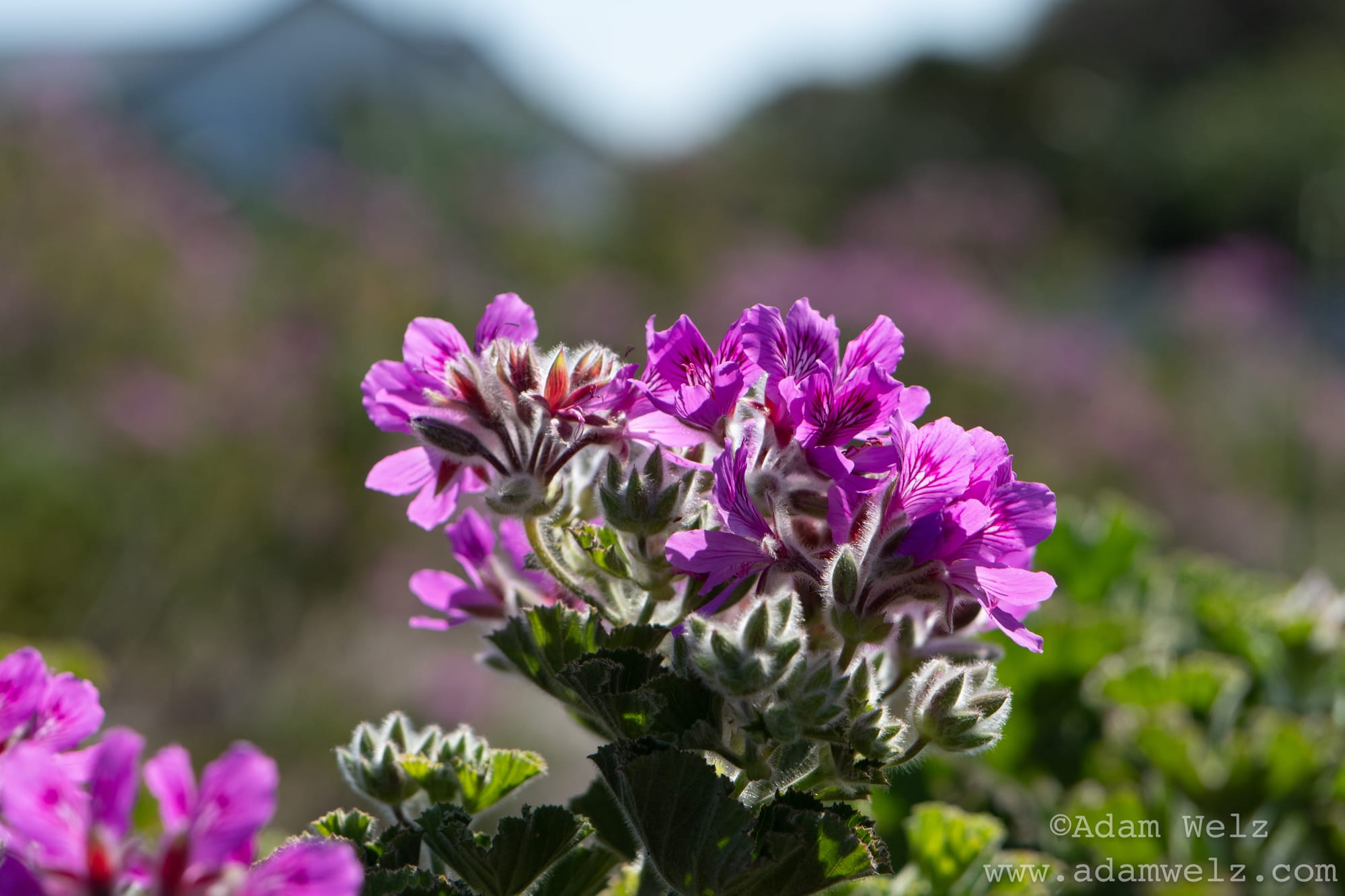
Because pelargonium hybrids aka garden geraniums are ubiquitous almost everywhere it's easy to forget that their parent species are actually from somewhere, and in the case of Pelargonium cucullatum that somewhere is right here in the southwestern Cape. And, as it happens, the pure wild forms of this species make excellent garden plants.
You don't need to go to a commercial garden centre and buy a geranium cultivar that's not evolved with local pollinators and that might hybridise with locally native species or become invasive. If you learn about your local pelargoniums – iNaturalist and the many excellent books on Cape fynbos can help – you can figure out what your local types are yourself.
Note: Be sure to grow plants from your nearest natural population so you don't mess up the genetic structure of the species, an issue I'll get into in future SPNA newsletter posts. Different populations of Pelargonium cucullatum and many other plants have evolved particular adaptations to their local environments. You don't want to risk mixing genes from elsewhere into your local wild populations because it might compromise their future survival. Pelargonium cucullatum plants from the False Bay coast of the Peninsula are genetically different to those just a few kilometres west, for example. (You can read more about this and related problems here.)
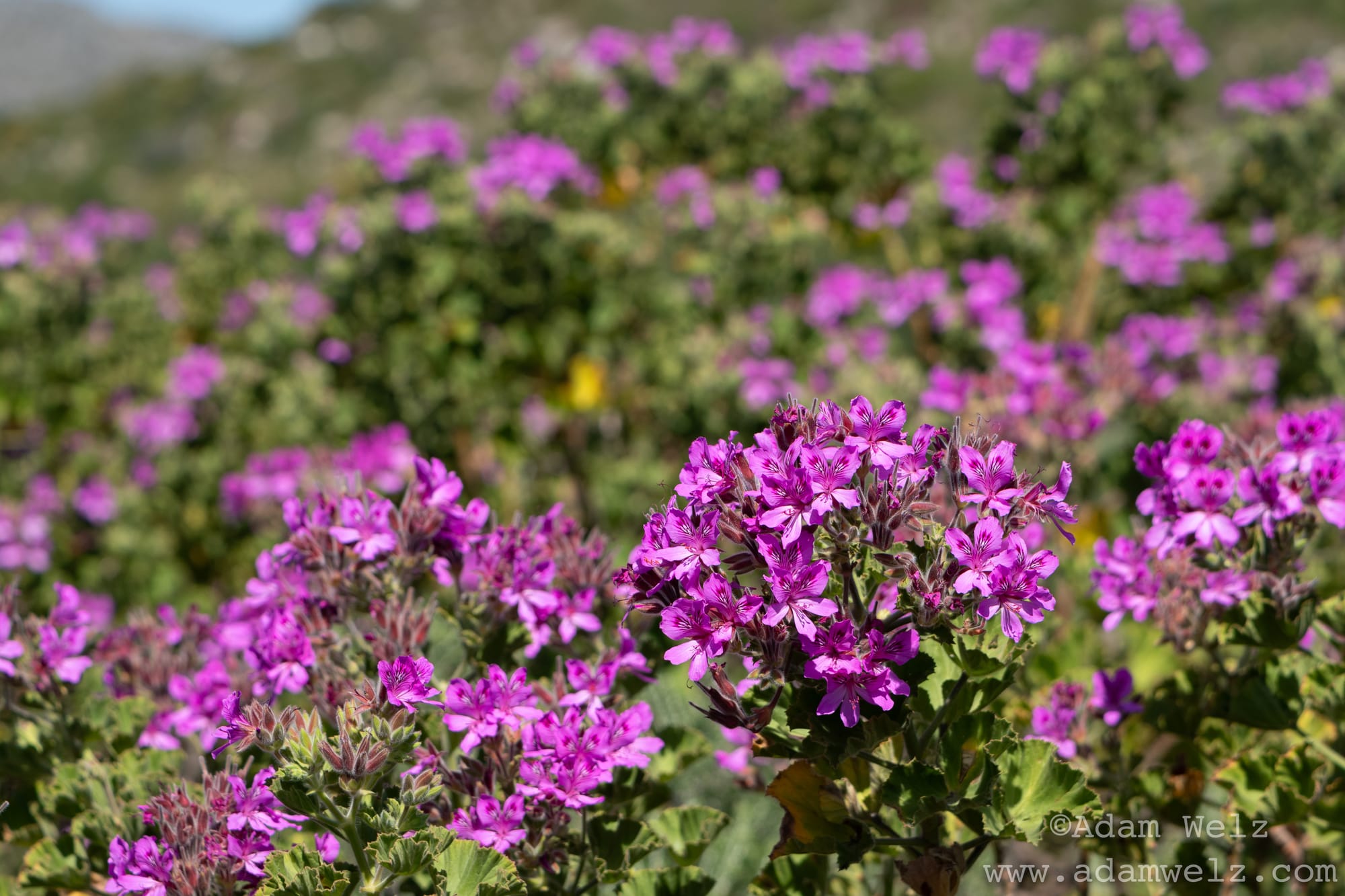
If we want to garden as if nature mattered we must place a heavy emphasis on growing local species from hyperlocal stock. Although many gardeners think of this as a limitation, it isn't. Once you begin to know your local wild species you will realise that almost everywhere in the world has huge number of local plants to garden with, even though (as I have written before) they're usually not easy to get through mainstream garden centres.
The South Peninsula Nature Alliance is working with partners to figure out responsible and practical ways of supplying gardeners in this area with hyperlocal plants. Please subscribe to this free newsletter to stay in touch!
See you in the fynbos!
Adam Welz
P.S. Garden designer Tara Dalton has just published Cape Peninsula Coastal Gardens, a useful resource book for gardeners near the shore. (Yours truly wrote an insert on ecological traps for the book.) You can find out more – including where to buy it – here https://www.taradalton.com/tara-s-book
©Adam Welz / www.adamwelz.com
Follow the SPNA on Instagram at www.instagram.com/komfynbos/
Check out Adam Welz's nature photography at www.instagram.com/adamwelz.wild
None of the writing or photography on this site was produced with or by generative AI. All the typos, grammaticals & inelegant sentences are mine.