How To Build An Ecological Trap

It’s trendy to have more nature in your life, either by spending more time in natural areas or by bringing more nature into your home and yard. Bringing more nature into your space is almost universally viewed as a Completely Good Thing but [downer alert!] I’m here to tell you that it often isn’t.
Carelessly bringing nature into your space can be really, really bad for wildlife.
I’ve come to realise that most people — including professional conservationists, urban planners, landscape architects and gardeners — have a pervasive blind spot: they ignorantly or wilfully disregard the dangers of ecological traps and build them all over the place.
What is an ecological trap? Simply speaking, it’s a situation in which something in the environment attracts a wild creature to live in a place that is bad for it — a place it can’t successfully breed in, a place that harms it or even kills it outright.
Consider a homeowner who’s making a beautiful indigenous garden to support butterflies, bees and birds. Their intentions are good, but their garden may in fact be harmful to wild species because they simply haven’t contemplated that anything bad may result from their efforts.
Gardeners sometimes build ecological traps is by planting colourful indigenous plants and then dosing them with pesticides to keep their flowers from being eaten by insects; the plants attract butterflies which circle delightfully around them, feed on their nectar, and then become poisoned — possibly then also poisoning insect-eating birds. (This can happen even if you don’t apply pesticides in your yard. Some commercial growers dose their plants with poison so they look ‘perfect’ and insect-free in nurseries, thus creating toxic time-bombs to be taken home by unwitting customers.)
That’s not the only type of ecological trap you can build in your garden, and not all traps are equally obvious. Even when ecological traps are pointed out, many people remain deep in denial of them.
Think about outdoor cats. Many scientific studies, including many using collar-mounted cameras, show that free-roaming cats have massive impacts on small animals like lizards and birds, and are a major cause of the ongoing decline in songbirds around the world. A Cape Town study demonstrated that the average pet cat kills 90 animals per year, so the city’s 300,000 domestic cats collectively kill 27.5 million animals annually. (Have you noticed how few chameleons are left in the suburbs compared to just ten years ago?) Also, the average Cape Town cat brings home less than 20% of the animals it catches, causing its owners to vastly underestimate its impact.
In my experience most South African cat owners simply refuse to acknowledge that if you want your garden to be a good space for small wildlife — and you want to keep your beloved pets from getting lost or run over — you need to keep your felines indoors. In many other countries people are realising that indoor cats don’t kill wildlife and live longer and healthier lives, so perhaps South Africans are just behind the curve on this one.
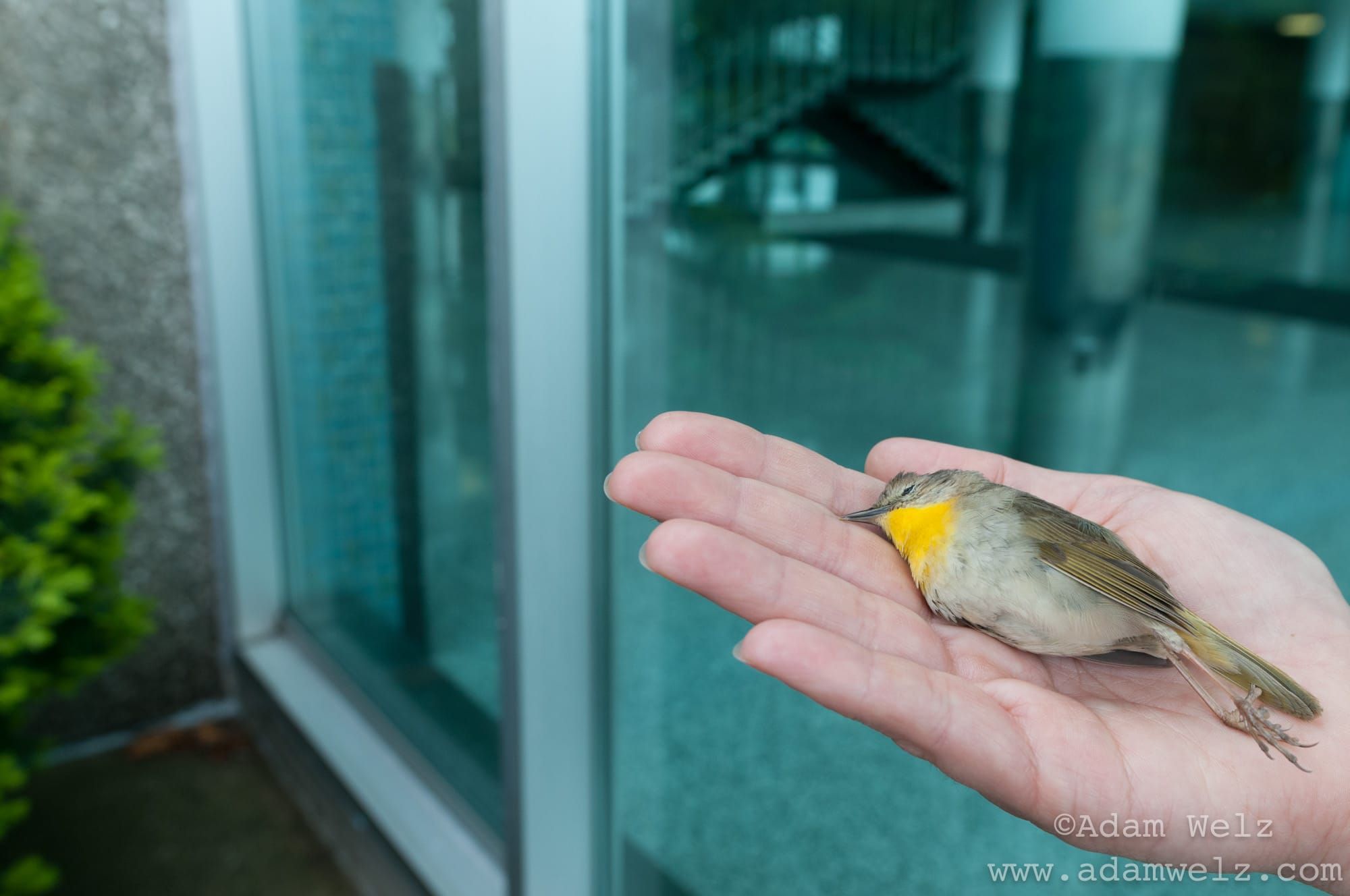
Window glass is another hugely under-appreciated killer of birds, which collide with glass because a) it’s transparent and they don’t see it and b) because it reflects images of sky and vegetation, which they think they can fly into. Birds aren’t stupid, but until very recently in their evolution they have not had to contend with anything like glass in their airspace, so they're not adapted to recognise and avoid it. People often think that a bird that flies away after hitting a window will be OK, but research shows that many die of brain and neck injuries soon after.
Architects and homeowners routinely place sheets of glass right next to beautiful indigenous gardens, thus filling our neighbourhoods with highly effective bird-killing devices. When this is pointed out, a common response is “I’ve only seen a few birds fly into my windows”, as if millions of houses killing just a few birds a year doesn’t quickly become a serious problem. Window glass is now considered the top human cause of bird deaths.
Research shows that marking the outside surface of windows with dots, lines or patterns of no less than 5mm in diameter or width, placed not more than 50mm apart, makes glass visible to birds. Widely-spaced window decals like those often sold in garden centres don’t work. The American Bird Conservancy’s website www.abcbirds.org contains many scientifically-tested solutions to window collisions and is well worth a visit.
Does your garden have a water feature like a pond or swimming pool? These can drown large numbers of animals unless you provide an easy way for them to get out. Make sure you install a grippable, sloping ramp that extends down below the water’s surface. You can make your own from wood or shadecloth or buy a commercially-manufactured escape ramp.
Walls and fences, too, can prevent animals like toads and lizards from moving between their habitats, to say nothing of roads, which inflict massive carnage on traveling animals.
People also create ecological traps with light. Leaving lights on all night lures large numbers of insects to their deaths, and increasing numbers of studies are showing dangerous collapses in ecologically-vital insect populations around the world. If you need an outdoor light for security, make it a motion-triggered one that doesn’t stay on for more than a few minutes at a time.
The best way to avoid ecological traps is to observe how your local animals use your yard and move around your neighbourhood. Imagining what it’s like to be your local animals is a powerful tool for professional planners and ordinary homeowners alike, and if we want wildlife to thrive in our spaces we’ve got to get much better at using it.
See you in the fynbos!
Adam Welz
P.S. I’ll be writing more on the subject of ecological traps in future newsletter posts. If you want to get these fresh and free in your inbox, hit any of the Subscribe buttons on this site and pop in your name and email address.
P.P.S. This post is an updated version of an article I wrote for garden designer Tara Dalton’s new book, Cape Peninsula Coastal Gardening.
©Adam Welz / www.adamwelz.com
Follow the SPNA on Instagram at www.instagram.com/komfynbos/
Check out Adam Welz's nature photography at www.instagram.com/adamwelz.wild
None of the writing or photography on this site was produced with or by generative AI. All the typos, grammaticals & inelegant sentences are mine.