Good Fences Make Good Primate Neighbours

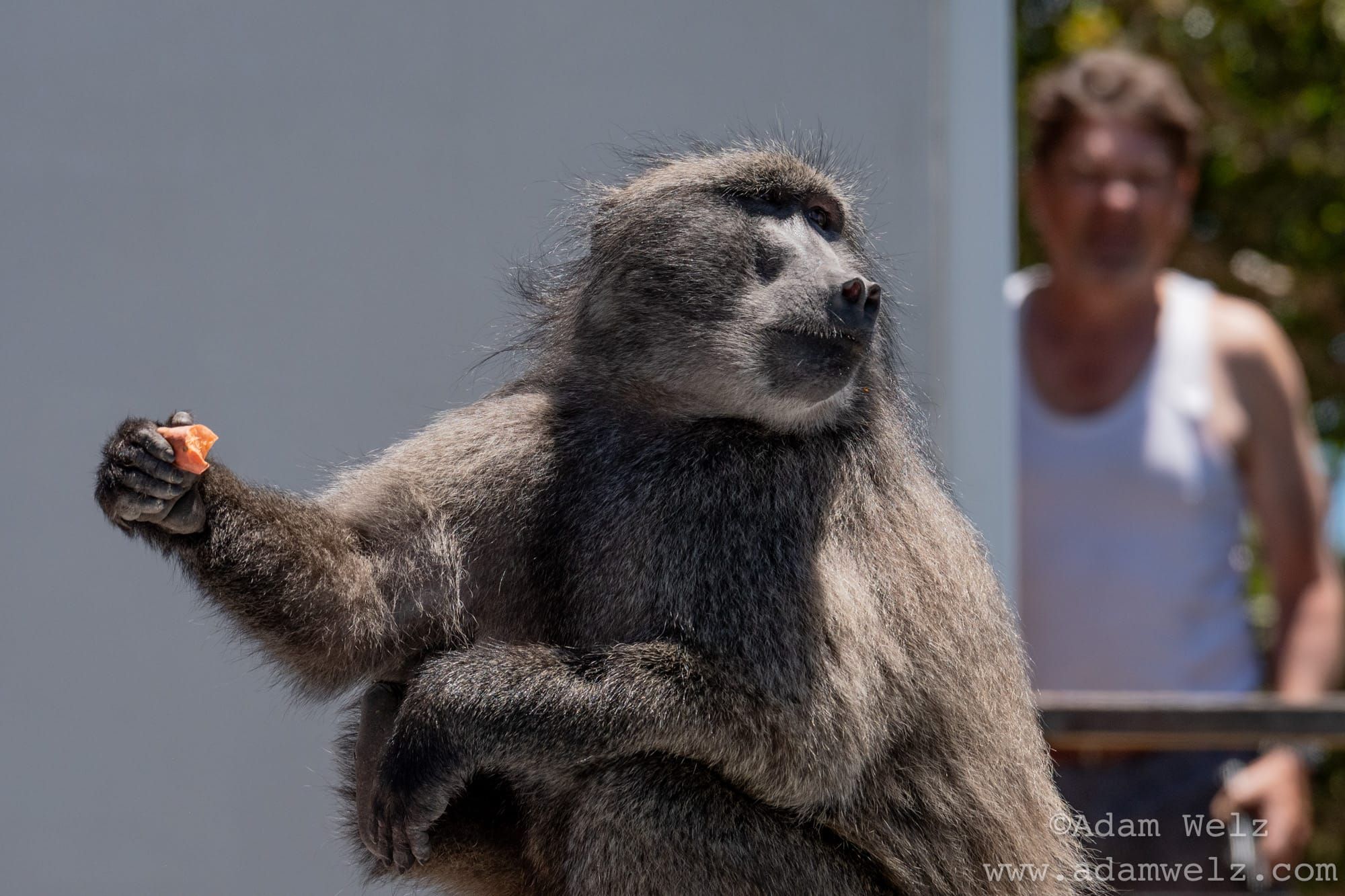
If I’ve learned anything from my decade-plus of living on the South Peninsula, it’s that baboons cause fights around here. Few things are more polarising in these parts these not-so-distant relatives of ours, but it might not always have been this way.
Fossils show that baboons and their ancestors, as well as humans and our ancestors, have lived in the same South African landscapes for at least two million years. It’s fair to say that we evolved here together, although it’s hard to know what the relationship between baboons and the indigenous people of the Cape Peninsula was before European settlers arrived; it may have been collaborative or conflictual, or perhaps a bit of both.
We do know that since Jan van Riebeeck and his merry band of colonists showed up in 1652, baboons have been pushed out of much of their former Peninsula habitat by agriculture and urbanisation, and today the relationship between our two species in this region is characterised far more by conflict than collaboration.
This conflict extends to inter-human arguments about these shaggy primates, which I've seen spiral out of control. Many people periodically get very upset over baboon-related matters but very few people carefully figure out better ways of structuring our relationship with them over the long term, and some people have extremely strong views about baboons that, unfortunately, are backed by very few facts.
It seems easier to get outraged about the latest hot-button issue — like authorities trapping the Simon's Town baboons to put them in a caged facility — than to robustly assess evidence and carefully devise and implement practical, long-term baboon management strategies that work as well as possible for all.
To be clear, I don’t think people should deny their feelings and discard their ethics, but I do think that repeated bouts of outrage aren’t going to get us anywhere useful.
So I’d like to continue a discussion about baboons that’s as clear, sober and evidence-based as possible and make the case to my fellow residents of the Kommetjie-Ocean View area for a well-maintained and regularly-patrolled Baboon Safety Fence (BSF) around our neighbourhoods. Much of my work is focused on sustaining wild species in our neighbourhoods, but some species just can’t thrive here. For their welfare and ours, we need to keep them out.
This discussion is particularly relevant to people who care about the ecological role of baboons and people concerned about baboons being confined to sanctuaries because if the current situation with the Slangkop troop (that lives in the Kommetjie-Ocean View area) continues, it is on track to be the next group of baboons to be removed from our natural ecosystems and placed in a fenced sanctuary. The Slangkop troop is still getting into trouble in urban areas, angering human residents, losing members to vehicle collisions, etc., despite the best efforts of the monitors who are paid to herd and protect them.
I think a BSF is necessary in this area for three reasons: 1) It’s a very good thing that baboons continue to live in the natural landscapes of the Cape Peninsula, but 2) it’s a very bad thing for them to spend time in urban neighbourhoods and 3) a BSF is the most practical means of sustaining them in natural areas and keeping them safely out of urban areas.
Besides the fact that baboons have been in the Cape for a long time and thus arguably have at least as much of a moral claim on living here as humans do, I think they’re a valuable part of our cultural and natural heritage. They’re part of what it means to be a Capetonian. In the recent past, Peninsula baboons were trapped and used in medical research; we arguably owe them for this sacrifice. Tourists love them, so in purely financial terms baboons equal more money for Cape Town. (I don’t need to remind anyone here about how many jobs tourism now supports.)
And baboons are important players in the mega-diverse natural ecosystems of the Peninsula, performing multiple roles including carnivore, herbivore and seed-disperser.
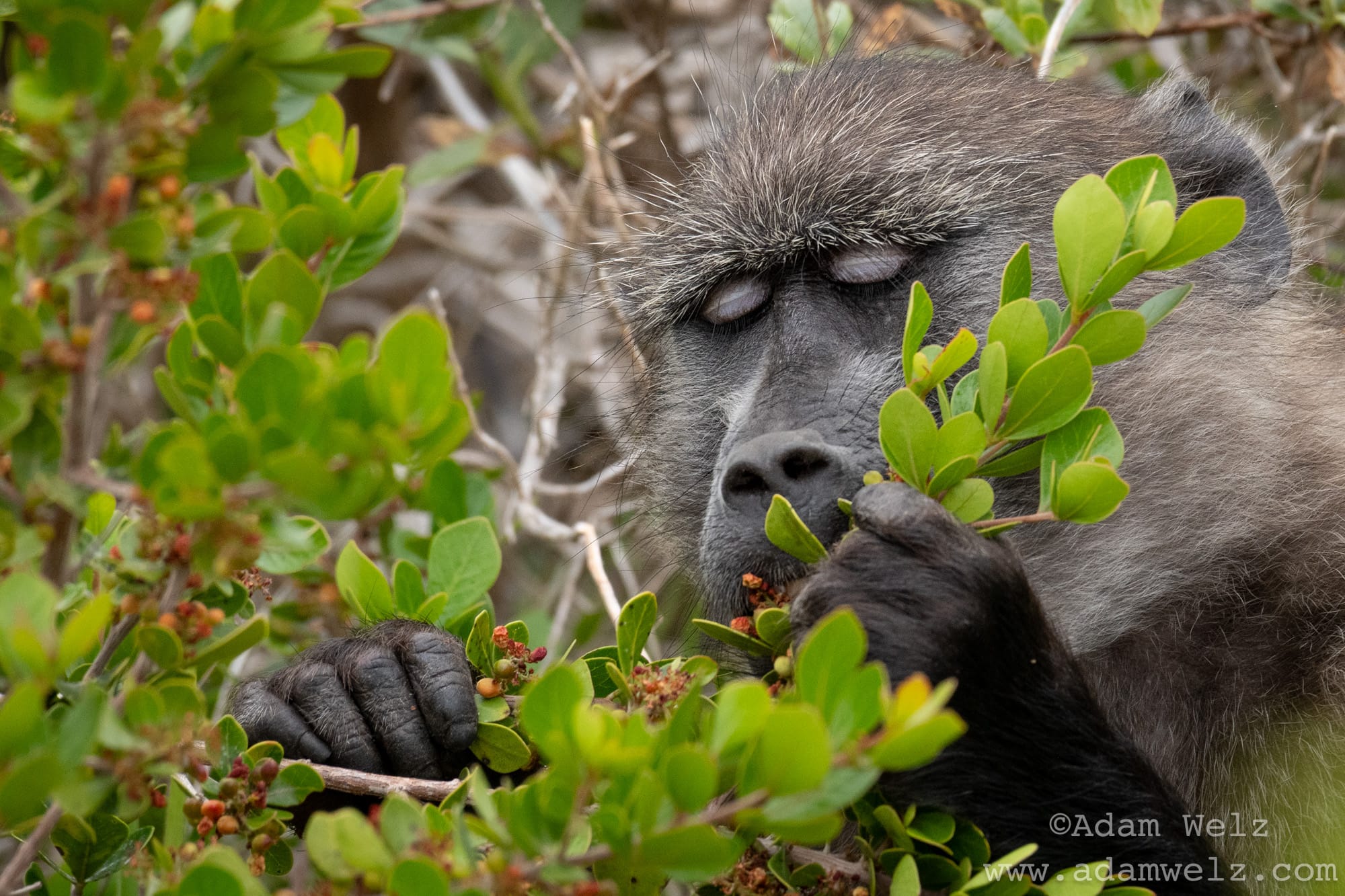
Problems arise because baboons are drawn into urban areas by human food. Grabbing a loaf of bread or some fruit out of a house or a rubbish bin gives a baboon far more calories in much less time than foraging in natural fynbos habitat does. Sometimes baboons sleep over in urban areas because they find safe places on rooftops, balconies etc. that are conveniently nearby sources of human food.
But despite them being very attractive places for baboons find food, urban areas are overall very bad for baboons. Stated differently, our neighbourhoods are ecological traps for baboons.
Ever since the first thorough study and management plan for baboons on the Cape Peninsula was published in the year 2000 – you can read it below – it’s been clear that the more time they spend in urban areas, the more injuries and deaths they sustain. Baboons are hurt on security barriers, cut by glass, illegally poisoned or shot by residents, injured and killed in fights with dogs, run over by vehicles, and so on.
Humans and our pets suffer too. Baboons damage gutters, roofs, doors, windows and cars, sometimes costing homeowners thousands of Rands in just a few minutes. Fights with dogs often result in seriously hurt or dead pets.
Many baboons in this area have also been found carrying antibodies to human viruses; because we’re often in such close physical proximity, diseases are being passed between us. (Bear in mind that both HIV and Ebola entered the human population via close contact with primates.)
If we want baboons to thrive on the Cape Peninsula, we must keep them out of urban areas to the greatest extent possible and give them access to as much natural habitat as possible.
I am aware of arguments made by some pro-baboon activists that if we keep our doors and windows closed, keep food out of view, keep dogs inside, remove dangerous security barriers, remove vegetable gardens and fruit trees from our yards and keep all rubbish secured in baboon-proof bins, then baboons will have no strong reason to come into urban areas and, even if they do, will be safe here.
However, having lived here for more than a decade, I simply don’t see a situation arising anytime soon in which the incentives for baboons to enter our neighborhoods are eliminated to the necessary extent — to say nothing of threats to baboons within urban areas like security spikes and dogs.
I don’t think it’s realistic to expect kids to keep windows and doors closed whenever baboons are anywhere nearby, fruit bowls to be kept permanently out of view, all veggie gardens and fruit trees to be taken out, dogs be kept indoors for days at a time, etc., especially with the increase of newcomers and tourists in the South Peninsula who, as a rule, know very little about baboons. It only requires a few people to slip up to make forays into urban areas worthwhile for baboons.
Until now we have relied on baboon monitors a.k.a. rangers — people with paintball guns who are employed to follow and herd baboons — to do this, but it’s clear to me that monitors alone are insufficient. I’ve repeatedly seen baboon troops approach the urban boundary and then split up to outflank the monitors and enter my neighborhood. Once they’re inside the urban area, it’s extremely difficult for monitors to move them out because baboons can easily leap walls, run across rooftops and hide in gardens to evade them. I’ve also repeatedly seen monitors fail to keep baboons from dangerously crossing Kommetjie Road, where many have been run over.
There are just too few monitors to “defend” very long, easily-crossed boundaries between natural and urban areas, and there’s no realistic prospect of employing vastly more of them.
To avoid being outflanked by baboons at the urban boundary, monitors often try to keep baboons as far away from urban areas as possible. This denies baboons access to large areas of fynbos near the urban boundary, preventing them from accessing natural food and fulfilling their ecological roles here. It also doesn’t always work: determined baboons sometimes get around the monitors and into urban areas anyway.
The good news is that this is not an intractable problem.
We can massively reduce the length of the Kommetjie - Ocean View urban boundary that monitors need to “defend” by building an electrified Baboon Safety Fence along much of it. This would allow monitors to succeed at their jobs — they would only have to “defend” a few roadway gaps in the fence — and give baboons regular access to fynbos areas near the urban edge.
Baboon Safety Fences are not a new or untested thing. The Cape Town neighbourhood of Zwaanswyk has successfully kept baboons out of their area and thriving in the adjacent natural habitat for over ten years with one, and the City of Cape Town and partners are now extending it northwards to Constantia Nek.
I’m not saying that we can simply build a BSF around Kommetjie and Ocean View and consider the baboon “problem” solved. As any security expert will tell you, an un-patrolled fence that's not maintained is a waste of time. We'll have to budget for regular fence line patrols and maintenance over the long term.
We will also have to consider where to place gaps and gates in the BSF for traffic to pass and residents to access the Table Mountain National Park, and design the fence so that smaller wild species like grysbok, porcupines and genets can pass through it where necessary. So we’ll need to conduct a careful planning process.
Will building and maintaining BSFs around Kommetjie and Ocean View cost money? Of course. But continuing with the current situation in which we’re paying monitors to do an impossible job is costing much more than just their salaries. It’s costing us in terms of property damage, conflict and stress in our communities, it’s costing baboons in terms of stress, injury and death – and it’s imposing untold costs on the natural ecosystems around us because baboons are being prevented from fulfilling their important ecological roles here.
When you add all these costs together I think they come to far more than the cost of a fence.
It’s important to keep in mind that various government authorities have legal and political obligations to protect humans and their property and also to protect wild species. (Activists, however strongly they may feel about baboons, do not have these obligations.) If the Slangkop troop continues coming into urban areas and its members continue to be injured and killed, authorities will have to change their management approach. At the moment, in the absence of BSFs around Kommetjie and Ocean View, their options are to humanely kill the troop or to capture its members and confine them to a sanctuary for the rest of their lives.
Sustaining baboons within the natural landscapes of the Cape Peninsula will require sustained investments of money, creativity and work. But I think these are necessary and worthwhile investments. We, the residents of the South Peninsula, should support those who design, fund, build and maintain Baboon Safety Fences, which are an important element of a good, long-term baboon management strategy.
See you in the fynbos!
Adam
P.S. You can read my (carefully fact-checked) article for Yale Environment 360 on the Cape Peninsula baboon situation here: https://e360.yale.edu/features/cape-town-baboons
P.P.S. I encourage readers to inform themselves about the Cape Town Baboon Partnership's Final Action Plan, which you can find at this website https://baboons.org.za/final-action-plan-2025/ and read Dr Ruth Kansky and Dr Dave Gaynor's 2000 study on the Peninsula's baboons, which you can download right here:
©Adam Welz / www.adamwelz.com
If you'd like to get this newsletter free whenever a new instalment is published, click on any of the Subscribe buttons on this site, enter your name and email address, then confirm your subscription in your inbox. Signed-in members can also leave comments under newsletter posts.
Follow the SPNA on Instagram at www.instagram.com/komfynbos/
Check out Adam Welz's nature photography at www.instagram.com/adamwelz.wild
None of the writing or photography on this site was produced with or by generative AI. All the typos, grammaticals & inelegant sentences are mine.